
A midlife crisis or the beginning of a deeper transformation?
Most of us associate change with major life events – and I’m no exception. A breakup, a move, an illness, or an unexpected turn of events can genuinely alter the course of our lives. These moments are easy to remember because they’re visible. We can clearly point to a “before” and an “after.”
My experience, however, has been that the most important transformations begin much earlier. By the time a major turning point arrives, something has often been quietly unfolding within us for a long time. The feeling that the life that once felt natural no longer inspires us or fills us with the same sense of aliveness.
Many people call it a midlife crisis, burnout, or simply a loss of direction. I would emphasize something else: these moments invite us to reconnect with ourselves.
Perhaps this feels familiar to you.
You’ve been showing up for years. Working. Taking care of others. Managing responsibilities. At the end of the day, you close your laptop and find yourself thinking that after all this time, life should feel much easier than it does. Sunday afternoon finally gives you a little space for yourself, yet your mind is still circling the same questions it was wrestling with months ago. Your child asks you to play, and although you’re physically there, part of you is already trying to solve next week’s problems.
Meanwhile, the weeks pass. Then the months. Sometimes even the years. And more and more often, a feeling begins to surface that you’re missing something important. As if you’re somehow walking alongside your life rather than fully living it.
When success and achievement no longer provide the answers
At some point, you realize there are questions that neither experience, knowledge, nor achievement seem able to answer:
- Who are you beneath the roles you play every day?
- Why do you sometimes feel alone even when you’re surrounded by people?
- Why do you stay in situations or relationships that, deep down, you’ve known for a long time you want to leave?
- Why is it so hard to believe that you’re lovable when offering love to others comes so naturally?
- And how is it possible that after all the learning, growth, and self-development work you’ve done, you still find yourself running into the same inner walls?
Honestly, it wasn’t particularly pleasant to face these questions in the prime of my life.
Over time, I came to understand that the answers weren’t waiting for me in another course or the hundredth self-help book. The most important insights arrived when I began noticing which decisions came from a genuine inner knowing – and which were driven by fear, the need for approval, or simple habit.
Why do we lose Ourselves When We Have to Grow Up Too Soon?
As the years went by, I found myself running into the same pattern again and again when working with people:
The people who came to me carrying these questions had one thing in common. Almost all of them had grown up too soon.
Psychology often refers to this as parentification – when a child has to take responsibility for things that were never theirs to carry.
From the outside, these families often look perfectly ordinary. Yet there is usually something in the atmosphere that keeps a child constantly alert. A mother’s or father’s unpredictable moods. An unspoken tension. A sense that the adults are carrying so much that there is little room left for what matters to the child.
In this environment, the child learns to pay attention. They learn to read facial expressions, tones of voice, and silences. They quickly develop an instinct for when to adapt, when to disappear into the background, and when to appear stronger than they actually feel.
Years later, that child often becomes the adult everyone can rely on.
The one who listens, the one who helps, the one who fixes things.
The one who keeps everything together.
People turn to them for advice.
They can quickly see a solution to someone else’s problem.
Yet answering a much simpler question becomes increasingly difficult:
Who am I in all this?
It sounds like a simple question. Yet it often turns out to be one of the hardest.
The Trap of People-Pleasing and Survival Strategies
For me, change begins when we finally start seeing the stories that have been quietly running our lives.
The story that says we must always be strong.
The story that says love has to be earned.
The story that says other people’s needs matter more than our own.
Or that deeply rooted feeling that somehow we’re still not good enough.
These beliefs have often been with us for so long that we mistake them for truth.
Then one day, a crack appears. And through that crack, something else begins to emerge. Something that was always there but never had enough room to breathe.
You begin to suspect that these stories are not who you are. They are survival strategies that once helped you get through life.
And perhaps that’s the hardest part. At some point, you can already see the pattern. You know something isn’t working. You feel there must be more. Yet you still find yourself repeating the same cycles.
Because it isn’t easy to let go of something that once saved you.
Courage and a deep breath
Of course, this doesn’t happen overnight.
It takes courage to face these stories again and again. To catch them in the act. To recognise them as they’re happening. To occasionally choose a different response from the one you’ve always known.
You say no to something you would once have postponed for months.
You realise you don’t have to save everyone.
You care less about what other people think of your decisions.
You still have enough energy left to be fully present with the people you love.
In conversations, you stop automatically agreeing just to be the good boy or the good girl, and begin speaking for what genuinely matters to you.
Curiosity, courage, joy, and trust gradually take up more space within you. And with that, life’s bigger questions begin to clear.
- What kind of work feels genuinely meaningful?
- Who do you want to share your life with?
- What do you say yes to?
- And what do you say no to?
Direction begins to reveal itself. It’s like watching the fog slowly lift from a landscape. The path isn’t being created in that moment. It was there all along. You can simply see it now.
What Everyday Alchemy Means to Me
“Small shit, small lotus. Big shit, big lotus.”
Those were the words of an old Taoist teacher when I once went to him looking for practical guidance during a difficult period of my life. He said it. Then he turned around and walked away. At the time, I was furious. Today, it makes me smile.
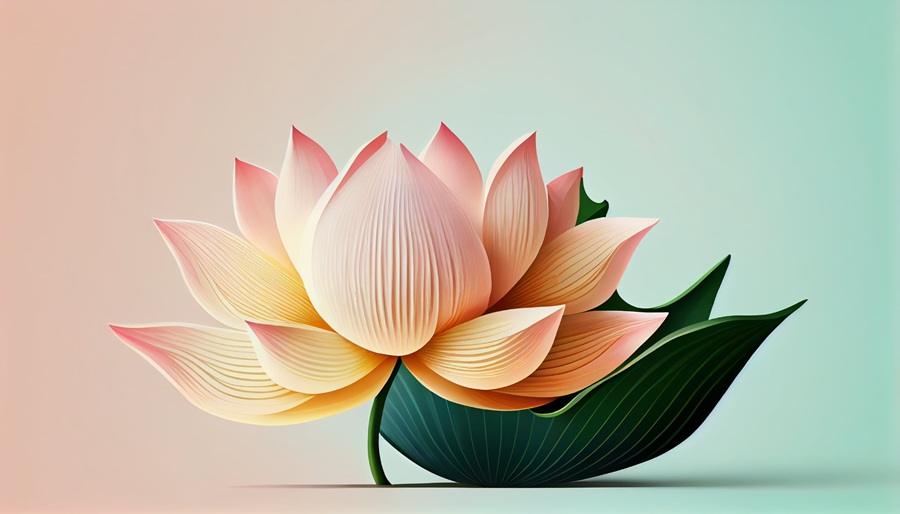
Over the years, I’ve come to understand more and more of what he meant. A lotus does not grow from crystal-clear water. It rises out of mud. Out of a place that, at first glance, seems messy, uncomfortable, or meaningless.
The same is often true in our lives. The situations we most want to escape are frequently the ones carrying the greatest potential. Losing our sense of direction. Living with uncertainty. Or realising that we’ve been living inside a story that has become too small for us.
For a long time, I believed difficulties had to be overcome or avoided. Today, I see that they often point toward the way inward.
This is what Everyday Alchemy means to me.
The understanding that life’s challenges keep bringing us back to the same questions until we’re finally willing to hear what they’re trying to teach us.
For me, alchemy is not some mystical process separate from everyday life, where you spend years meditating in a cave in order to find yourself. Rather, it is the art of allowing wisdom, inner strength, and freedom to emerge from the raw material of ordinary life. The art of allowing loss to become compassion. Uncertainty to become trust. And feeling lost to become a deeper sense of direction.
It is about supporting the slow process through which survival patterns gradually loosen their grip, and our own inner compass begins to guide us instead.
Life’s most important question is not what is still missing
Nor is it what else you need to achieve, prove, or fight for.
The deeper question is this: how willing are you to reconnect with your capacity to feel, choose, belong, and live from what has always been alive within you?
Perhaps that is the meeting you’ve been waiting for all your life.
Your own life may be waiting for you to finally arrive fully within it.
If you’d like to explore these ideas more deeply, I invite you to learn more about Everyday Alchemy.